
Beyond the Piggy Bank: Helping Your Child Get Smart About Money Through Play

Beyond the Piggy Bank: Helping Your Child Get Smart About Money Through Play
Let’s be real for a moment. Talking to kids about money isn’t exactly fun. The moment words like budget, saving, or investing come up, most kids mentally check out — and honestly, we can’t blame them. Even many adults find money conversations uncomfortable.
But what if teaching kids about money didn’t feel like a lesson at all?
What if it felt more like playtime?
That’s where things start to get interesting.
At Funtime.pk, we believe some of the most important life skills are learned right in the middle of laughter, mess, and imagination. This isn’t about sitting your child down with a notebook. It’s about using toys, games, and even simple paper play money to introduce money concepts in a way that feels natural, fun, and actually sticks.
Why Play Works Better Than Lectures (Every Time)
Think back to your own childhood. You probably don’t remember the lectures — but you do remember the games. Play is how children explore the world. It’s how they test ideas, make mistakes, and slowly understand how things work.
Money is an abstract concept. Numbers on paper don’t mean much to a child. But when money becomes something they can touch, count, earn, and spend in a game, it suddenly makes sense.
That’s the magic of learning through play. It sneaks learning in without resistance.
Real Skills, Hidden Inside Simple Games
When kids play money-based games, they’re doing much more than counting coins. They’re building skills they’ll use for the rest of their lives — often without realizing it.
Just the other day, we played a simple “shop” game at home. My child had to:
-
Decide what they could afford and what they couldn’t
-
Add prices and give change
-
Choose between buying something small now or saving for something bigger later
Those are real decisions. Real thinking. And no lecture could have taught it better.
Building a Healthy Relationship With Money Early
Many adults grow up stressed about money. That usually starts with silence or negativity around the topic when they were young.
When money is introduced in a relaxed, playful way, kids learn something important early on: money isn’t scary. It’s not mysterious. It’s simply a tool.
They begin to understand that money helps them reach goals — whether that’s buying a toy today or saving for something bigger tomorrow. That mindset alone can make a huge difference later in life.
Toys and Games That Naturally Teach Money Skills
You don’t need expensive tools or complicated systems. Some of the best learning happens with very simple toys.
Board Games That Do the Heavy Lifting
Classic board games are surprisingly powerful teachers.
-
Monopoly teaches spending, saving, investing, and consequences (sometimes painfully!). For younger kids, Monopoly Junior keeps things simple and age-appropriate.
-
The Game of Life shows how life choices affect finances over time — careers, families, and big purchases all play a role.
These games open the door to conversations that would otherwise feel awkward.
The Toy Cash Register (and Fake Money) Trick
A toy cash register with paper money might look simple, but it’s incredibly effective.
Try setting up:
-
A pretend grocery store using kitchen items
-
A small café or restaurant
-
A toy shop with clear price tags
Give your child a limited amount of play money and let them shop. They learn counting, spending limits, and value — all while having fun.
Let them take turns being the cashier too. Giving change and managing “customers” builds confidence fast.
Turning Everyday Moments Into Money Lessons
You don’t need special time or complicated plans. Money lessons can fit naturally into daily life.
1. Allowance: The Basics of Earning and Choice
A small weekly allowance can be a great teaching tool.
We keep basic chores non-paid (because everyone helps), but offer extra tasks for extra money. This helps kids understand that money is earned.
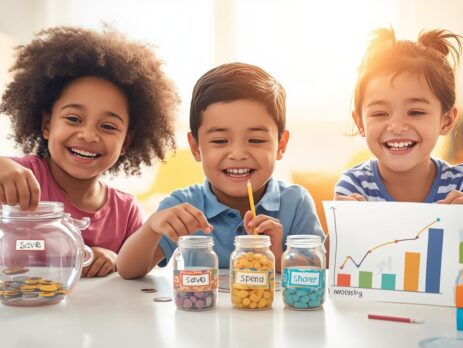
Using labeled jars works wonders:
-
Spend
-
Save
-
Donate
-
Invest
Seeing the money physically divided helps kids understand choice and responsibility in a very real way.
2. Grocery Shopping = Real-World Practice
Your next store visit can double as a lesson.
Ask questions like:
-
“Which one gives us more for the same price?”
-
“Do we really need this, or is there a better option?”
Let your child pay for one small item with their own money. Counting cash and receiving change builds confidence like nothing else.
3. Teaching Saving in a Way Kids Can See
Clear jars work better than hidden piggy banks. When kids can see their savings grow, they stay motivated.
Add a small “interest bonus” now and then:
“This is extra money because you saved instead of spending.”
You can also visit a real bank together. Depositing coins and seeing their name attached to an account makes saving feel grown-up and exciting.
Common Questions Parents Ask
When should I start teaching my child about money?
Earlier than you think. Around ages 3–5, kids can start counting coins and using a simple piggy bank. From 6–12, they’re ready for saving goals, budgeting, and even basic investing ideas — as long as it stays fun.
What if my child gets bored with pretend games?
That’s normal. Switch things up. Try a pretend restaurant, movie ticket booth, or charity drive. The moment it feels forced, pause and come back later with a fresh idea.
How does this help in a digital-money world?
Physical money teaches value first. Once that’s understood, it’s easy to explain how cards and apps access money stored in the bank. The key lesson stays the same: digital or not, money is limited and earned.
Final Thoughts: A Small Effort With a Big Payoff
Teaching your child about money doesn’t require perfection, expertise, or long lessons. It just requires intention — and a little creativity.
By using play, everyday toys, and simple paper money, you’re giving your child something far more valuable than facts. You’re giving them confidence, awareness, and a healthy mindset about money.
That’s an investment that pays off for life.
At Funtime.pk, we’re here to support parents with practical ideas, meaningful toys, and learning that feels like fun. If you’d like help choosing toys for specific age groups or want more playful learning ideas, just say the word — we’re happy to help.

Leave a Reply